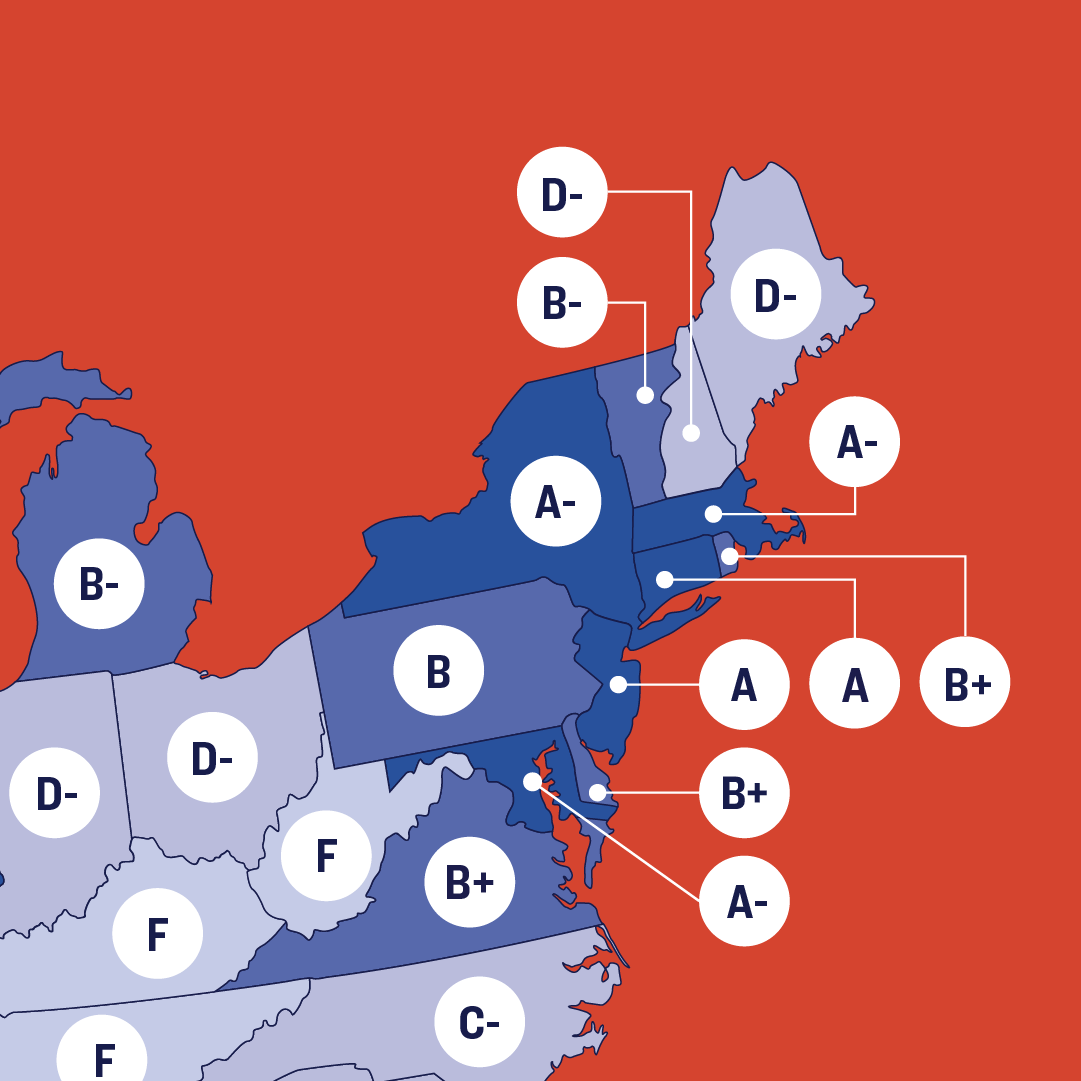
Connecticut State Law Summary
Posted on January 2, 2012
Last updated May 3, 2012
In our publication Gun Laws Matter 2012: Understanding the Link Between Weak Laws and Gun Violence, the Law Center ranked each state based on a review of state laws in 29 different firearms-related policy areas. Connecticut ranked 4th out of 50 – having enacted some of the strongest gun violence prevention laws. Among other things, Connecticut:
- Requires a background check prior to the transfer of a handgun between individuals other than licensed firearms dealers;
- Requires a background check for all firearm transfers at gun shows (but not for private transfers of long guns elsewhere);
- Requires handgun dealers to obtain a license, and handgun purchasers to first obtain an eligibility certificate;
- Prohibits the transfer or possession of assault weapons and certain 50 caliber rifles, but not large capacity ammunition magazines;
- Imposes a two-week waiting period on long gun transfers from licensed dealers;
- Acts as a “point of contact” state, conducting its own background checks, rather than relying on the FBI;
- Requires the reporting of all individuals prohibited from possessing firearms to the database used for firearm purchaser background checks;
- Requires firearm owners to report the loss or theft of their firearms;
- Allows local governments to regulate firearms and ammunition; and
- Allows local governments discretion to deny a concealed weapons permit.
Connecticut does not, however,
- Limit the number of firearms that may be purchased at one time;
- Impose design safety standards or microstamping requirements on handguns; or
- Regulate ammunition sales.
In 2009, Connecticut had the fifth lowest rate of gun deaths per capita among the states. (Even this relatively low ranking means that 173 people died from firearm-related injuries in Connecticut in that year.) In addition, based on data published by Mayors Against Illegal Guns, in 2009, Connecticut supplied the tenth lowest number of crime guns to other states per capita. Connecticut exports crime guns at a rate that is less than half the national average.
Connecticut Firearms Laws
For details about specific firearms laws in Connecticut, choose a topic below, or see all of the firearms laws in this state.
Prohibited Purchasers Generally
Minimum Age to Purchase & Possess
Domestic Violence & Firearms
Disarming Prohibited Persons
Background Checks
Mental Health Reporting
Multiple Purchases & Sales of Firearms
Retention of Sales & Background Check Records
Waiting Periods
Dealer Regulations
Private Sales
Gun Shows
Licensing of Gun Owners & Purchasers
Registration of Firearms
Reporting Lost or Stolen Firearms
Concealed Weapons Permitting
Open Carrying
Guns in Vehicles
Guns in Schools
Other Location Restrictions
Design Safety Standards for Handguns
Locking Devices
Personalized & Owner-Authorized Firearms
Child Access Prevention
Assault Weapons
Large Capacity Ammunition Magazines
Fifty Caliber Rifles
Machine Guns & Automatic Firearms
Non-Powder Guns
Ammunition Regulation
Microstamping & Ballistic Identification
Trafficking
State “Right to Bear Arms”
Local Authority to Regulate Firearms
Immunity Statutes